

Dreaming of a stunning weave, long flowing hair you can dye or curl to your heart's content? To achieve that perfect look, choosing natural human hair extensions is essential. But that's where the real challenge begins. How do you navigate the myriad of origins? Asia (Indian or Malaysian hair), South America (Brazilian or Peruvian hair), or Europe (Eastern European hair)? And how do you avoid getting scammed while ensuring you pay a fair price?
This article does not claim to be exhaustive, but merely aims to clarify a few things about the multitude of types of natural hair extensions that can be found online or in specialized stores.
1 - The "Remy" Standard

Copyright:
The most known and generally used standard to qualify natural hair extensions is Remy. The term "remy" or "remy hair" refers to the following criteria:
- Hair of exclusively human origin
- "Virgin" hair, meaning it has not undergone any chemical treatment (no coloring, no perms). The cuticles are intact.
- Hair all aligned in the same direction from root to tip
This designation is not regulated, so be careful, it can be misused and therefore is not necessarily a guarantee of quality.
2 - Brazilian, Indian, or Malaysian Hair Extensions
Copyright:
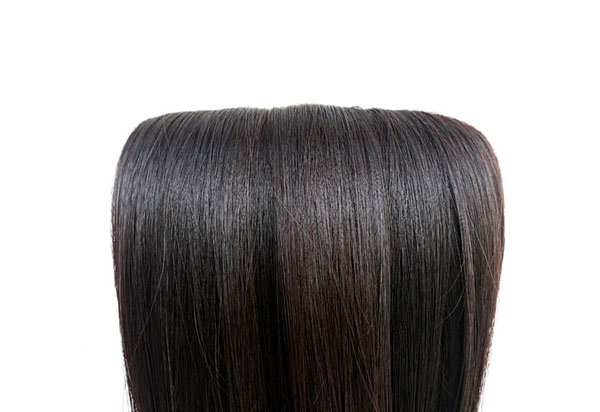
At the risk of disappointing you, most Brazilian hair extensions primarily come from India. They are simply processed by Brazilian companies before export. Indian hair is slightly wavy, while Malaysian hair is straighter. Most natural hair extensions you find on the market will have a dark color, brown or even black, due to their origin. Lighter, European-type hair is very rare and therefore very expensive.
3 - Single Drawn or Double Drawn? What's That?
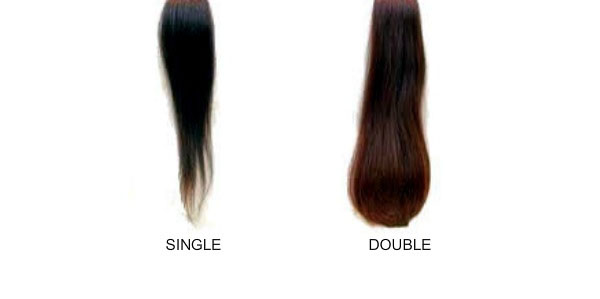
"Single drawn" refers to hair extensions that theoretically come from a single donor. In fact, the hairs making up these extensions will not all be the same length.
"Double drawn" describes hair extensions where all the hairs are the same length.
The best way to avoid mistakes, when possible, is to obtain a sample of the natural hair extensions you wish to purchase. Touch the hair, shampoo it (to remove any traces of silicone used to mask poor hair quality), and the ultimate test: burn it to ensure it is 100% human.